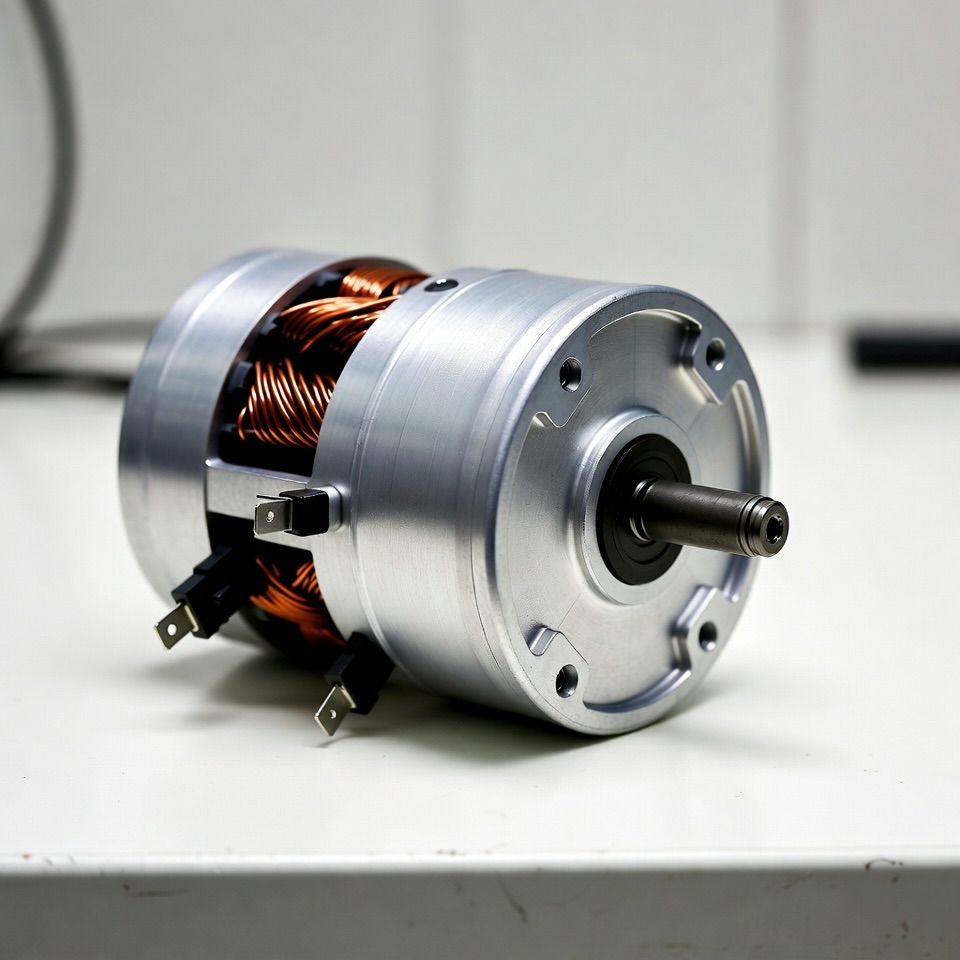
This groundbreaking research reveals how fine-tuning waste particle size (hello, 250 µm!) can supercharge biogas production, turning trash into renewable energy gold!
When it comes to green energy, turning trash into treasure is a game-changer. This exciting study explores how particle size affects biogas production from municipal organic waste in Ouagadougou, Burkina Faso. By optimizing particle size, researchers have unlocked new ways to produce cleaner energy, improve waste management, and support a sustainable future. Let’s break it down!
Anaerobic digestion (AD) is the superhero of waste management. It’s a natural process where microorganisms break down organic materials without oxygen, producing biogas—a mix of methane (CH₄) and carbon dioxide (CO₂). The methane can be used as a renewable energy source, while the leftover material, digestate, serves as a natural fertilizer. Talk about multitasking!
One of the key factors in this process is particle size. Smaller particles expose more surface area, making it easier for microbes to work their magic during digestion. However, there’s a catch: too small, and we face challenges like acid build-up, which can slow down methane production.
The researchers collected waste from three pre-collection centers in Ouagadougou, including food scraps, vegetable peels, and green waste like grass and leaves. Here’s what they did:
The study revealed some fascinating trends:
This research has big implications:
With these findings, the future of biogas looks bright:
Biogas is more than a renewable energy source—it’s a solution for sustainable waste management, energy independence, and a cleaner planet. By understanding how small changes like particle size can make a big impact, we’re one step closer to a greener future.
Biogas: A renewable energy source made of methane (CH₄) and carbon dioxide (CO₂) produced when microbes break down organic waste in the absence of oxygen. - This concept has been also explained in the article "Renewable Fuel | for Power Sustainability".
Anaerobic Digestion (AD): The natural process where microorganisms munch on organic material without oxygen, creating biogas and nutrient-rich fertilizer.
Methane (CH₄): The star of biogas! A powerful gas that can be burned to produce clean energy.
Particle Size: How big or small the waste pieces are, affecting how fast and efficiently microbes can digest them.
Volatile Fatty Acids (VFAs): Short-chain acids created during digestion that microbes convert into methane—too much can slow the process.
Digestate: The nutrient-packed leftovers from anaerobic digestion, perfect for use as fertilizer.
Hydrolysis: The first step in digestion, where big organic molecules break into smaller, microbe-friendly bits.
Nikiema, M.; Barsan, N.; Ouili, A.S.; Mosnegutu, E.; Somda, K.M.; Maiga, Y.; Tidiane, C.C.O.; Ouattara, C.A.T.; Nedeff, V.; Ouattara, A.S. Determination of Particle Size for Optimum Biogas Production from Ouagadougou Municipal Organic Solid Waste. Sustainability 2024, 16, 9792. https://doi.org/10.3390/su16229792
From: University of Yembila Abdoulaye Toguyeni; Joseph KI-ZERBO University; Vasile Alecsandri University of Bacau.