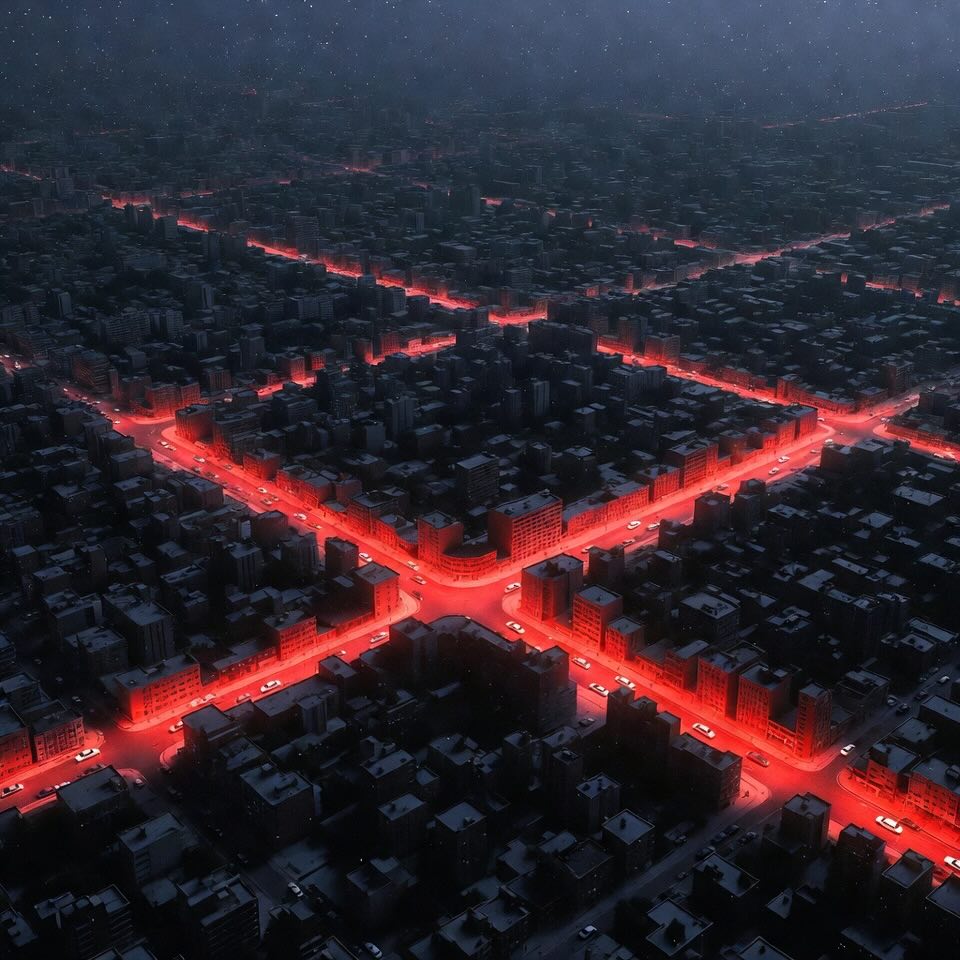
Researchers have developed an AI-powered traffic management system that combines real-time vehicle detection, traffic prediction, and smart signal control to significantly reduce urban congestion and improve traffic flow by 50%.
Picture this: You're approaching a traffic light, and instead of the usual frustrating wait, the signal seems to know exactly when to turn green. No, it's not magic – it's artificial intelligence at work!
Recent research has unveiled an innovative Autonomous Smart Traffic Management System (ASTM) that's turning heads in the urban planning world. This isn't your grandmother's traffic light system; it's a sophisticated AI-powered solution that's showing impressive results in reducing traffic congestion and keeping cities moving.
At the heart of this system lies a powerful combination of AI technologies working in perfect harmony:
The system starts with a state-of-the-art computer vision model (YOLO V5) that acts like an eagle-eyed traffic officer, constantly monitoring and counting vehicles. But unlike human officers, this AI never needs a coffee break and can track multiple vehicles simultaneously with incredible accuracy.
Here's where it gets really interesting: The system doesn't just react to current traffic – it predicts future patterns! Using a sophisticated neural network (RNN-LSTM), it analyzes historical data to forecast traffic conditions up to 12 hours in advance. Think of it as a weather forecast, but for traffic jams!
Armed with real-time data and predictions, the system dynamically adjusts traffic light timing. Gone are the days of fixed-time signals; these smart lights adapt to actual traffic conditions, ensuring optimal flow in all directions.
The numbers don't lie, and they're pretty impressive:
To put the system through its paces, researchers used CARLA, a sophisticated traffic simulator. Think of it as a video game for traffic management – but instead of high scores, they were looking for efficiency gains. The virtual environment allowed them to test various scenarios without disrupting real-world traffic.
The future looks bright for smart traffic management:
This revolutionary system shows us a glimpse of the future where AI doesn't just assist in traffic management – it leads the way to smoother, more efficient urban mobility. As our cities continue to grow, solutions like these will become not just helpful, but essential for maintaining the pulse of urban life.
Christofel Rio Goenawan. ASTM :Autonomous Smart Traffic Management System Using Artificial Intelligence CNN and LSTM. https://doi.org/10.48550/arXiv.2410.10929
From: Korea Advanced Institute of Science and Technology Daejeon.