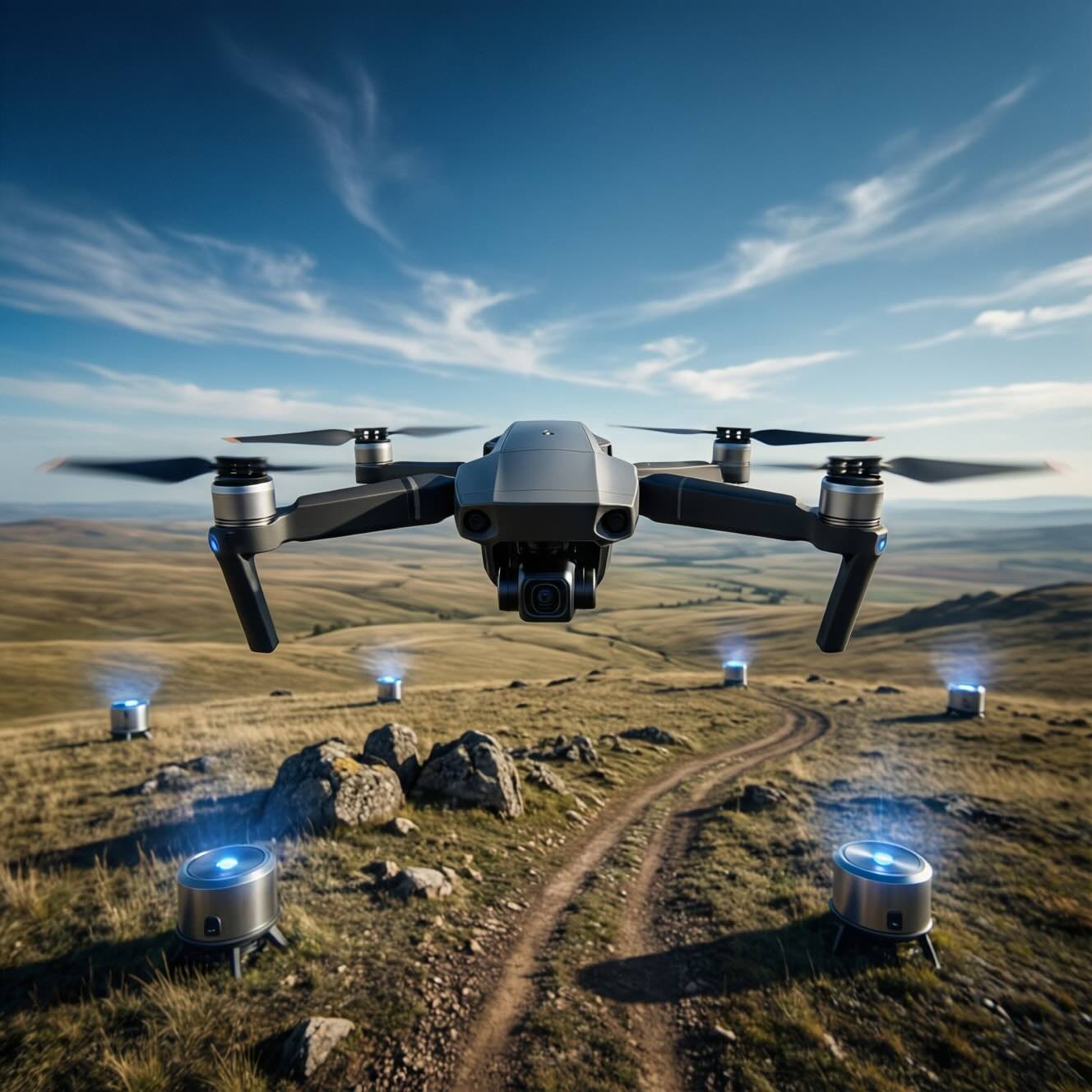
This research presents a hybrid simulation model that predicts future motorway EV fast-charging demand by integrating traffic flow data, vehicle characteristics, and environmental factors to support strategic charging infrastructure planning.
The electric vehicle (EV) revolution is cruising along the highways of Europe, but there's a big question buzzing under the hood: Will we have enough places to charge all these EVs once they hit the roads en masse?
A new research study from Slovenia's Faculty of Logistics and China’s Ningbo University tackles this electrifying challenge by simulating future EV fast-charging needs along motorways. Spoiler alert: It's more complex than just installing a few extra chargers at rest stops.
In this article, we break down the paper, "Hybrid Model for Motorway EV Fast-Charging Demand Analysis Based on Traffic Volume," in a fun and digestible way. Let’s plug into it!
Imagine this: You’re zipping down a European motorway in your sleek new EV. But suddenly, that battery gauge starts dropping faster than expected — especially if it’s winter. And when you pull into a rest stop, all the fast chargers are occupied. Long queues, frustration, and a rapidly dying battery.
That’s what transport planners are trying to avoid.
EVs don’t “fuel up” like gas-powered cars. Fast charging takes time, and that creates potential bottlenecks, especially on motorways. So how do we make sure there’s enough charging capacity to meet future demand — during both regular and peak seasons?
To solve this, researchers developed a hybrid simulation model. What’s that? Well, it’s like combining brainy forecasting with traffic flow simulations to get a realistic peek into the future.
The model has two parts:
Together, these tools can help planners predict:
The researchers tested their model on actual motorway traffic data from Slovenia — a country perfectly placed between Central and Southeastern Europe, making it a hotspot for both local commuters and international freight trucks.
Some key traffic patterns they modeled:
The model simulated a futuristic fast-charging hub with multiple configurations:
This tells us that even a slight reduction in infrastructure can have big consequences on user experience and traffic flow. Especially when battery efficiency drops in winter — EVs just need more frequent charging in cold weather.
This isn’t a one-size-fits-all simulation. The model dynamically adjusts based on real-world variables, including:
It even accounts for psychological behaviors like “range anxiety” (aka the fear of running out of juice before finding a charger) and driver habits like skipping morning charges after home top-ups.
Here's the TL;DR of what the researchers discovered:
This model isn't just for Slovenia — it can be adapted for any region. This is how it can be applied:
And the coolest part? This simulation can become the foundation of a digital twin — a real-time, virtual replica of charging hubs that constantly updates with live traffic and weather data. Sci-fi stuff in action!
While the study is powerful, the authors also see opportunities for expansion:
This isn’t just good engineering — it’s smart city strategy in action.
The shift to electric vehicles is accelerating, but if we want a smooth ride into the future, we need more than just EVs on the road — we need the right infrastructure in the right places, planned with smart tools and flexible models. This study offers a blueprint for exactly that.
So next time you hit the motorway in your EV, just remember: behind every fast charger is a complex simulation working hard to keep your battery full and your journey stress-free.
EV (Electric Vehicle) - A car or truck powered by electricity instead of gasoline — it uses a battery and electric motor to drive. - More about this concept in the article "How Electric Vehicles and Smart Grid Tech Are Transforming Energy Distribution".
SoC (State of Charge) - The battery’s fuel gauge — it tells you how full the EV battery is, usually shown as a percentage. - More about this concept in the article "Smart EVs: How AI is Revolutionizing Battery Management".
Fast Charging / DC Charging - A high-powered charging method that juices up an EV battery much quicker than regular home outlets.
Traffic Flow - Measured as the count of vehicles traversing a specific road location within a given timeframe, serves as a predictor for peak traffic periods (hours or seasons).
Discrete-Event Simulation (DES) - A digital model that mimics real-life events (like EVs arriving and charging) to see how systems perform over time.
Probabilistic Model - A math-based method that guesses the likelihood of something happening — in this case, whether an EV will stop to charge. - More about this concept in the article "Probability Distributions in Engineering: Applications from Finance to Construction and Climate Risk Modeling".
Transit vs. Local Traffic - Transit traffic = long-distance travelers using the highway; Local traffic = drivers just going from town to town.
Battery Efficiency - How well an EV battery performs — affected by temperature, usage, and age (cold weather usually = less efficient).
Charging Hub - A rest stop with multiple charging stations where many EVs can charge at once — like an electric gas station.
Digital Twin - A real-time digital copy of a physical system (like a charging hub), updated with live data to help plan, predict, or improve operations. - More about this concept in the article "Personalized Learning with Generative AI and Digital Twins: The Future of Industry 4.0 Training".
Rupnik, B.; Wang, Y.; Kramberger, T. Hybrid Model for Motorway EV Fast-Charging Demand Analysis Based on Traffic Volume. Systems 2025, 13, 272. https://doi.org/10.3390/systems13040272