This research introduces a two-stage AI-driven optimization framework using Generative Diffusion Models (GDM) and Multi-Agent Reinforcement Learning (MADDPG) to enhance task assignment and flight path efficiency in UAV networks, addressing computational and energy constraints for dynamic, real-time applications.
Unmanned Aerial Vehicles (UAVs) are not just flying machines; they’re evolving into dynamic problem-solvers with applications ranging from disaster recovery to smart agriculture. But, with great versatility comes great computational demand. UAVs generate and process massive amounts of data, especially in real-time scenarios. Traditional computing methods struggle to handle these demands efficiently within the resource constraints of UAVs.
To bridge this gap, researchers have introduced a novel two-stage optimization approach for UAV path planning and task assignment. This method integrates advanced AI techniques, including Generative Diffusion Models (GDM) and Multi-Agent Deep Deterministic Policy Gradient (MADDPG), to transform how UAVs collaborate and execute tasks. Let’s dive into this fascinating world where cutting-edge AI meets aerial ingenuity!
UAVs face unique challenges:
Previous solutions either sacrificed accuracy by deploying lightweight models or relied heavily on external servers, causing latency issues. Clearly, a more intelligent, balanced approach was needed.
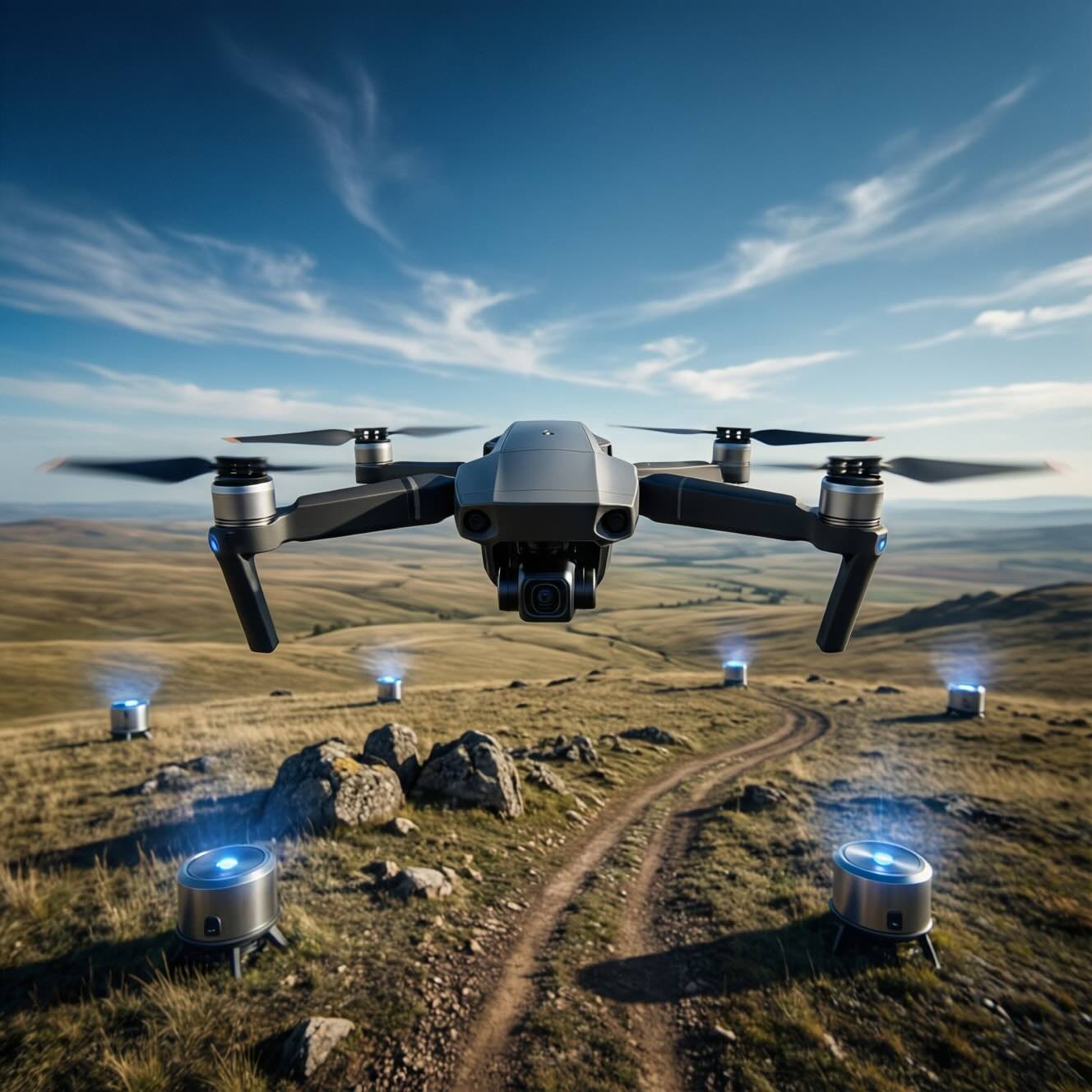
The researchers proposed a mother-child UAV swarm system, featuring a high-altitude platform (HAP) and multiple UAVs:
Simulations showed significant improvements:
This research paves the way for transformative advancements in UAV networks:
By integrating AI-driven optimization techniques, this study demonstrates how UAV networks can leap beyond current limitations. From smarter task allocation to efficient path planning, this approach is a beacon for future UAV applications.
The skies are no longer the limit! Let’s stay tuned as these innovations take flight—transforming industries, saving lives, and redefining what’s possible.
UAV (Unmanned Aerial Vehicle): Think of it as a super-smart drone that can fly autonomously or with a little help from a remote control. It’s like a flying robot! - This concept has also been explained in the article "Smart Drones, Smarter Rescues: The Future of Search and Rescue".
Deep Neural Networks (DNNs): These are brain-like computer models that help machines recognize patterns, like identifying objects in a photo or predicting the next move in a task. - This concept has also been explained in the article "Decoding Deep Learning Scaling: Balancing Accuracy, Latency, and Efficiency".
Path Planning: This is how drones figure out the shortest, smartest route to get their job done without wasting time or energy. - This concept has also been explained in the article "AI Takes Flight: Revolutionizing Low-Altitude Aviation with a Unified Operating System".
Age of Information (AoI): A fancy way of saying how fresh and up-to-date the data is—critical when you're working with real-time tasks.
Generative Diffusion Models (GDM): Think of these as creative AI models that generate super-precise decisions by cleaning up noisy data step by step. - This concept has also been explained in the article "Turbocharging Autonomous Vehicles: Smarter Scheduling with AI".
Multi-Agent Reinforcement Learning (MARL): A method where multiple AI agents (like drones) learn to work together and make the best decisions based on their environment.
HAP (High-Altitude Platform): A floating base station (like an airship) that helps drones with communication and coordination from the skies.
Xin Tang, Qian Chen, Wenjie Weng, Binhan Liao, Jiacheng Wang, Xianbin Cao, Xiaohuan Li. DNN Task Assignment in UAV Networks: A Generative AI Enhanced Multi-Agent Reinforcement Learning Approach. https://doi.org/10.48550/arXiv.2411.08299
From: National Natural Science Foundation of China; Guilin University of Electronic Technology; Guangxi University; Nanyang Technological University.